
If you are wondering how to talk to doctors when you’re new to caregiving, you are not alone. Doctor visits can feel overwhelming fast. You may walk in with a long list of worries and walk out wondering if you forgot to ask the most important question.
Providers are very busy but that doesn’t mean they won’t take the time to answer your questions. If they won’t, consider looking for a new provider!
Even though they are busy and have the next patient to get to, there are things we can do to be prepared. We can maximize the time they do have with us by being prepared and organized. Getting your questions and concerns addressed is the obvious goal for any doctor appointment for you or an aging loved one. We encourage you to check out our free checklists.

Both of these documents will help you prepare and organize thoughts as well as take action on items that need follow up.
Many family caregivers suddenly find themselves managing appointments, medications, follow-up instructions, and family updates with very little guidance. The good news is this: you do not have to be a medical expert to communicate well with doctors. You just need a simple system.
How to Talk to Doctors When You’re New to Caregiving:
- Why communication matters in caregiving
- Clear communication helps you:
- Understand your loved one’s condition and next steps
- Catch mistakes or missing information early
- Feel more confident during appointments
- Keep family members informed
- Reduce stress after the visit

When you know what to say, what to ask, and how to follow up, appointments become much more productive.
Here is an example: I attended a cardiology doctor appointment with one of my clients via speaker phone. The cardiologist asked her “How is your heart doing?” The client said “oh, not so bad. It’s ok.”
The cardiologist was ready to move on to the next question and I said “please wait, may I ask a question and share some information?” The doctor said “of course.” I reminded the client and the doctor that on our last “check-in call” the client shared with me that she had to use her “as needed for chest pain nitro tablets” 5 times in the last week just going up the stairs and sweeping the kitchen floor.
The end result of the clarification made the doctor increase her long-acting chest pain medication and now she goes weeks without the “as needed pill.” The lesson here is to make notes before the doctor appointment with clear symptoms, or concerns with concrete examples.
- How many pain pills have you taken this week or per day?
- These are the last 2 weeks of blood pressures or blood glucose results.
- I am still getting up 3-4 times each night to urinate.
- I am only sleeping 4 hours per night and I just lay there trying to go back to sleep.
- I get short of breath walking 1 block or 1 flight of stairs or walking to the end of my house.
- I get dizzy every morning and it lasts about 15 minutes before I feel I can walk around without feeling like I could fall.
These specific examples paint a clearer picture to the doctor and increase the chance that action will be taken and changes made in the treatment plan that will help your aging loved one get better faster.
This might take a bit of detective work on your part and should be a part of preparing for the doctor appointment. You may have to ask some clarifying questions to your aging loved one before you get the answers you need for the doctor.

- How to Prepare Before a Doctor Appointment
Before you meet with the doctor, take 10 to 15 minutes to prepare.
Bring these basics.
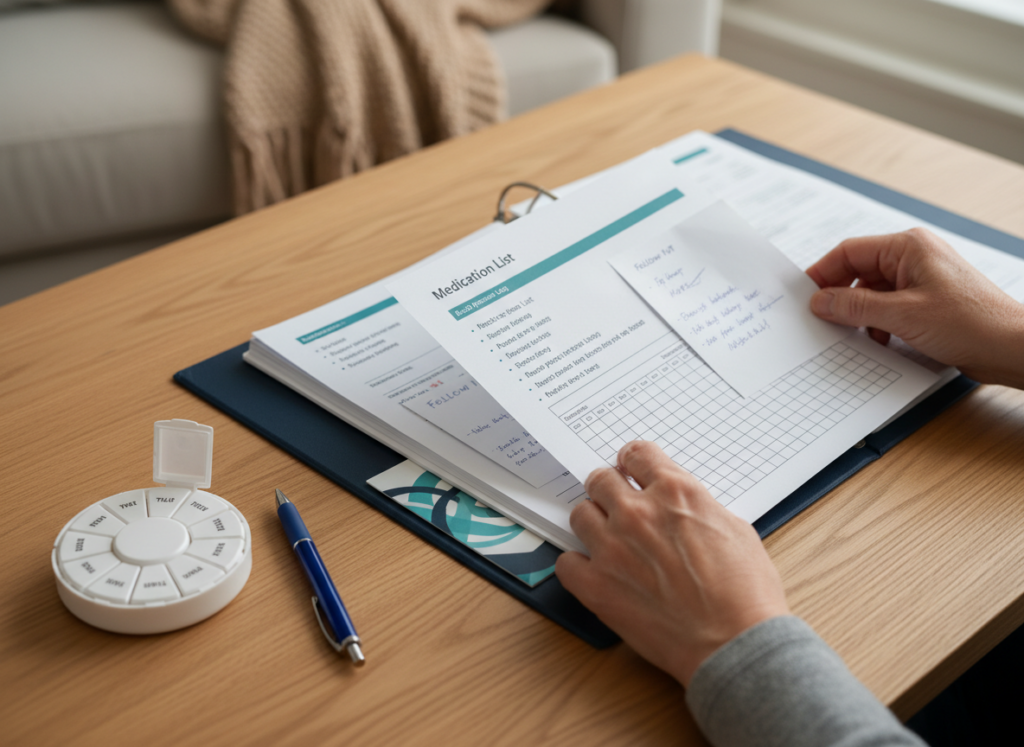
- A current medication list
- A list of symptoms or changes you have noticed
- Recent hospital visits, tests, or diagnoses
- Insurance cards and ID if needed
- A notebook, folder, or notes app for documentation
- Write down your top 3 concerns
- Do not try to cover everything at once. Start with the most important issues.
- Any logs or records such as weights, blood pressures, or blood sugar readings.
For more examples:
1. My mom has been more confused in the evenings.
2. My dad is missing doses of his medication at least 3x this week.
3. We are worried about falls after the recent hospital stay. What are some options?
What to say to the doctor
It can help to use a simple format: what you are seeing, how long it has been happening, and why you are concerned.
Script: Opening the conversation
“I’m new to helping care for my mom, and I want to make sure I understand what to watch for and what we should do next. Lately, I’ve noticed she seems more tired and confused, especially in the evening. This has been going on for about two weeks. Can you help us understand what might be causing that?”
Script: If you feel rushed
“I know we have limited time, so I want to focus on our biggest concerns first. The top three things we need help with today are medication confusion, fall risk, and understanding the next steps after this visit.”
Script: If you need plain language
“Can you explain that in simpler terms? I want to make sure I understand what this means and what we need to do at home.”
Questions family caregivers should ask
You do not need to ask everything. Start with the questions that help you make safe, practical decisions.
Questions about the condition
- What is the main issue we are treating right now?
- What changes should we watch for at home?
- What symptoms mean we should call your office?
- What symptoms mean we should seek urgent help?
Questions about treatment
- What is this medication for?
- When should it be taken?
- What side effects should we watch for?
- Are there any foods, activities, or other medications to avoid?
Questions about next steps
What happens next?
Do we need follow-up testing or another appointment?
Who should we contact if we have questions later?
- Can you write down the care plan or instructions for us?
- How to Follow Up After the Appointment
A good appointment does not end when you leave the office. Follow-up is where many caregivers lose track of important details.
Use this simple system:
- Review your notes the same day
- Confirm medications, tests, and referrals
- Schedule follow-up appointments right away
- Share updates with key family members
- Keep all instructions in one place
Script: follow-up call or portal message
“Hi, this is Pam calling for my dad after his appointment on Tuesday. We are reviewing the instructions and want to confirm the dosage change for his medication. We also want to make sure we understand when the follow-up appointment should be scheduled.”
How to document important medical information
You do not need a perfect chart. You just need a consistent way to track information.
Create one simple caregiver record with:
- Appointment date
- Doctor name and specialty
- Main concerns discussed
- Diagnosis or updates
- Medication changes
- Tests ordered
- Follow-up steps
Even a basic notebook or binder can make a huge difference.
Common mistakes to avoid at doctor appointments
When you are new to caregiving, these common mistakes can make appointments more stressful:
- Showing up without a written list of concerns
- Forgetting to bring an updated medication list
- Leaving without clear next steps
- Not asking who to contact with follow-up questions
- Assuming you will remember everything later
A little preparation can help you feel calmer and more confident.
Quick caregiver checklist
Before the appointment:
- Write down your top 3 concerns
- Bring medications or an updated list
- Gather recent test results or discharge papers
- Bring a notebook or open a notes app
During the appointment:
- Share what changes you have noticed
- Ask your most important questions first
- Request plain language if needed
- Write down next steps
After the appointment:
- Review your notes
- Confirm medication changes
- Schedule follow-up care
- Update family members if needed
FAQ
How do I talk to a doctor if I’m new to caregiving?
Start by sharing what changes you have noticed, how long they have been happening, and your top concerns. Bring notes and ask for clear next steps.
What questions should a caregiver ask at a doctor appointment?
Ask about the main diagnosis, medication changes, warning signs, follow-up care, and who to contact with questions after the visit.
How do caregivers keep track of medical information?
Use a notebook, binder, or digital note with appointment dates, doctor names, medication updates, test results, and follow-up instructions.
Ready for more support?
If you are just getting started, our New Family Caregiver Boot Camp is March 26. Join now and get the caregiver starter workbook + 30-day plan to help you feel more organized, informed, and supported from the start.
We hope this post gives you concrete action items and scripts to assist you on how to talk to doctors when you’re new to caregiving. We are confident that taking the time up front before and after each doctor appointment will make things run much more smoothly. You will also decrease your risk of feeling like you didn’t get what you needed from the doctor appointment.
Navigating the healthcare system is not for the faint of heart. It is complex and cumbersome. Oftentimes there are no quick answers. We are here for you if things get stalled, seem to be running in circles, or concerns that your aging loved one’s needs are not being met.
Check the resource section at the end of this post for links to resources that may help you grow and thrive as a new family caregiver. If you are someone that likes to cut to the chase and jump right in we invite you to our New Family Caregiver Boot Camp coming on March 26. A 2-hour workshop that will get you off to a great start. Plus, you will have access to more scripts, checklists, and guides at your fingertips for as long as you need them in our Caregiver Confidence Academy Hub you will have access to. Learn more about the Boot Camp here.
Thank you for spending time with us this week. We’re so glad to be part of your journey in caring for your aging loved ones. It’s an honor to share resources, insights, and a little encouragement to support you along the way. We look forward to bringing you more helpful tools and compassionate guidance in the weeks ahead. See you back here soon!
With care,
Pam and Linda
Your Nurse Advocates
“Compassionate Care for Aging Adults Along With Peace of Mind for the Family”
Resource List:
New Family Caregiver Boot Camp
Prep for the Doctor Appointment
After the Appointment Checklist
National Institute on Aging-Family Caregiver-Sharing Caregiver Responsibilities
Free Weekly Senior Saturday Newsletter
Medical Disclaimer
The information provided in our emails and all forms of content including but not limited to podcasts, blog posts, videos, or social media posts are for informational purposes only and is not intended to substitute professional medical advice, diagnosis, or treatment. Always seek the advice of your physician or other qualified healthcare provider with any questions you may have regarding a medical condition or care plan. Never disregard professional medical advice or delay seeking medical care because of something you have read here. Your health and well-being are our top priority.
About the Authors
At Your Nurse Advocate Consulting, Pam and Linda’s mission is to empower aging adults and their families to take control of their health, prepare for life’s uncertainties, and secure their peace of mind. We are dedicated to providing compassionate guidance, personalized support, and expert resources to help our clients navigate complex medical needs and organize their personal affairs.
As independent patient advocates we have a steadfast commitment to clarity, family well-being, and empowerment, we strive to make a meaningful impact by ensuring our clients feel confident, prepared, and cared for every step of the way on their healthcare journey.
Expert Guidance You Can Trust
With over 80 combined years of R.N. experience navigating the complex healthcare system, we stand as trusted guides for seniors and their families. Our expertise ensures they can access the care and resources they need without feeling overwhelmed by red tape or confusion.