
Palliative Care vs Hospice: Simple Definitions
Let’s start with the basics. What is the difference between Palliative Care vs Hospice.
What is palliative care?
Palliative care is extra support for symptoms, stress, and quality of life for someone with a serious or chronic illness—while they are still receiving treatment. You can use palliative care early in the illness, and it can help with things like pain, anxiety, sleep issues, nausea, and caregiver stress.
What is hospice?
Hospice is comfort-focused care when the goal is no longer to cure, and when life expectancy is often about 6 months or less (based on how the disease typically progresses). Hospice is still about care—it’s just a different focus: quality of life over aggressive treatment.
Key re-frame: Both palliative care and hospice are about comfort, dignity, and support for the whole family.
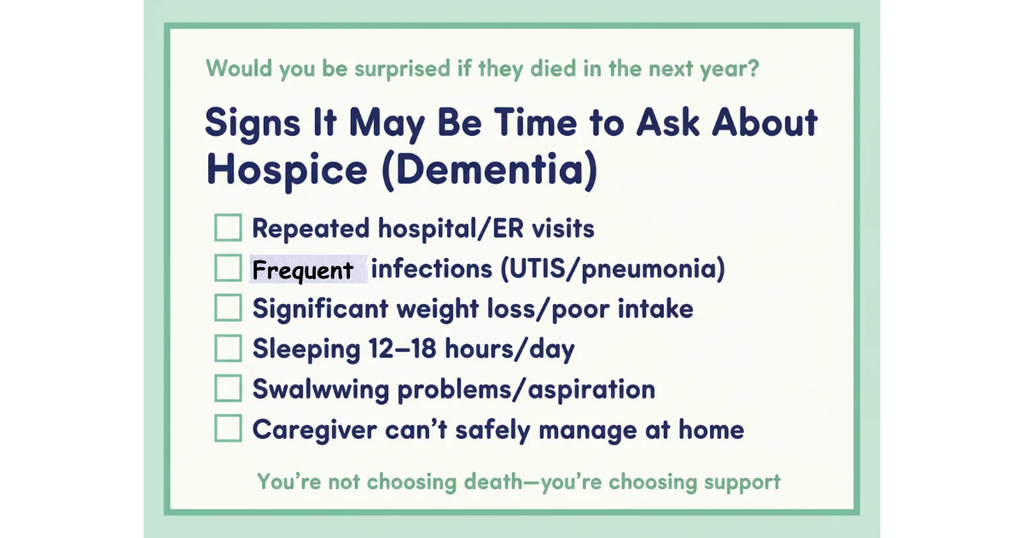
Sintra Image: Signs it might be time to ask about hospice when dementia is involved
The Biggest Differences (Quick Comparison) Palliative Care vs Hospice
· Timing: Palliative care can start earlier. Hospice is usually later, when decline is advanced.
· Treatment goals: Palliative care can happen alongside treatment. Hospice focuses on comfort rather than cure.
· Where care happens: Both can happen at home or in facilities (assisted living, skilled nursing, rehab, hospital—depending on local options).
· Team support: Both often include nursing support. Hospice commonly includes additional support like a social worker, chaplain/spiritual care, aides, volunteers, and bereavement support.
Why Dementia Makes the Timing Harder
Many families ask, “They’re not dying of cancer—do they still qualify?” This is an important point: Alzheimer’s is a progressive disease that affects the whole body, not just memory.
Over time, dementia can lead to:
· Incontinence (loss of bladder/bowel control)
· Loss of ability to walk safely (higher fall risk)
· Trouble speaking or finding words
· Swallowing problems
· Weight loss and poor intake
· Infections (like UTIs and pneumonia)
· Agitation, wandering, sleep changes
It can also make pain harder to detect, because a person may not be able to clearly report what they feel. That’s one reason families can feel like they’re constantly in “crisis mode.”
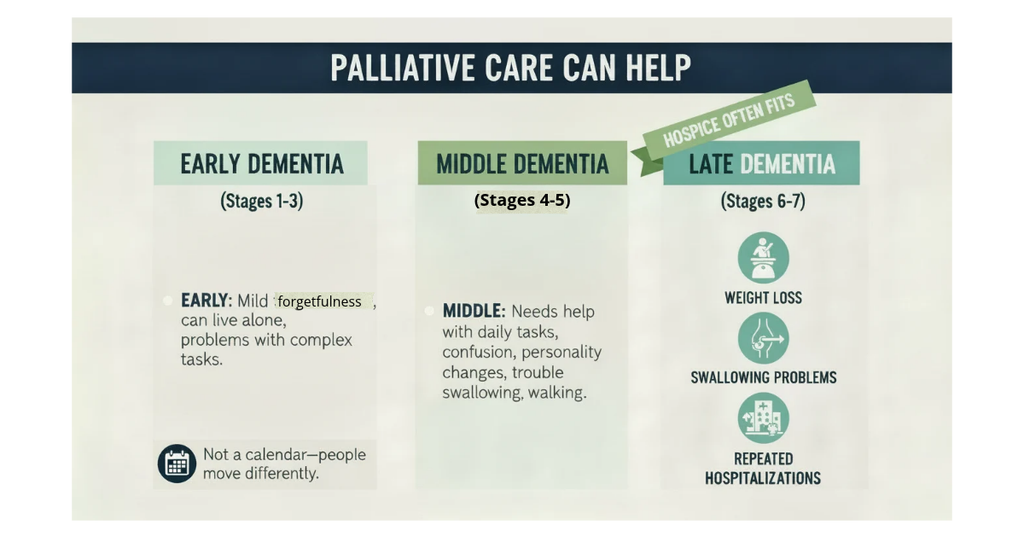
Sintra Image: Stages of a Terminal Dementia
Dementia Stages: Where Palliative Care and Hospice Often Fit
A common guide is the seven-stage dementia model. It’s not a calendar—people can move faster or slower.
Early stages (1–3)
· Stage 1: No noticeable symptoms
· Stage 2: Mild changes (misplacing items, occasional word-finding trouble)
· Stage 3: Mild decline others may notice (trouble planning, organizing, following complex tasks)
How palliative care can help here: symptom support (sleep, anxiety), stress support, and caregiver coaching.
Middle stages (4–5)
· Stage 4: Moderate decline (finances, missed medications, safety risks like leaving the stove on)
· Stage 5: More support needed (choosing clothes, anxiety with too many choices, getting lost—even at home)
How palliative care can help here: care planning, behavior support, sleep support, caregiver burnout support, and coordinating goals of care.
Late stages (6–7)
· Stage 6: Severe decline (needs help bathing/toileting, incontinence, behavior/personality changes, higher fall risk)
· Stage 7: Very severe (limited speech, needs help walking/sitting/swallowing, total care)
Where hospice often comes in: when decline is advanced and there are complications like weight loss, repeated infections, swallowing problems/aspiration, or repeated hospitalizations.
Important: You don’t “graduate” from palliative to hospice at one exact stage number. Hospice eligibility is based on overall decline and medical criteria—not just a label.
Practical Signs It May Be Time to Ask About Hospice
No one has a crystal ball. One helpful question to ask the doctor is:
· “Would you be surprised if my loved one died in the next year?”
Other common signs that it may be time to ask about hospice:
· Repeated hospitalizations or ER visits
· Frequent infections (UTIs, pneumonia)
· Significant weight loss or poor intake
· Increased sleepiness (sleeping 12–18 hours/day)
· More falls or major weakness
· Swallowing problems or aspiration
· Caregiver can’t safely manage at home anymore
A Hard Topic: Feeding, Swallowing, and Comfort
It’s human nature to want to feed someone we love. Eating is also social—it’s how families connect.
But when swallowing becomes unsafe, forcing food or fluids can cause choking, aspiration pneumonia, and more discomfort. In late-stage illness, the body often naturally needs less.
Sometimes, families can ask about “pleasure eating” (small amounts of favorite foods) when swallowing is still safe. And when a loved one is clearly refusing—closing their mouth, turning away—it’s important to respect that.
What Hospice and Palliative Care Can (and Can’t) Do for Dementia
Both hospice and palliative care can help with:
· Comfort-focused symptom management (pain, anxiety, agitation)
· Breathing issues, constipation, nutrition support
· Routines and safety planning
· Emotional support for the family
· Guidance on tough decisions (when to treat infections, when to transfer to the hospital)
What they usually do not provide is 24/7 in-home caregiving. Visits are typically intermittent. Families still play a major role, and the care team supports you with education, coaching, and a plan.
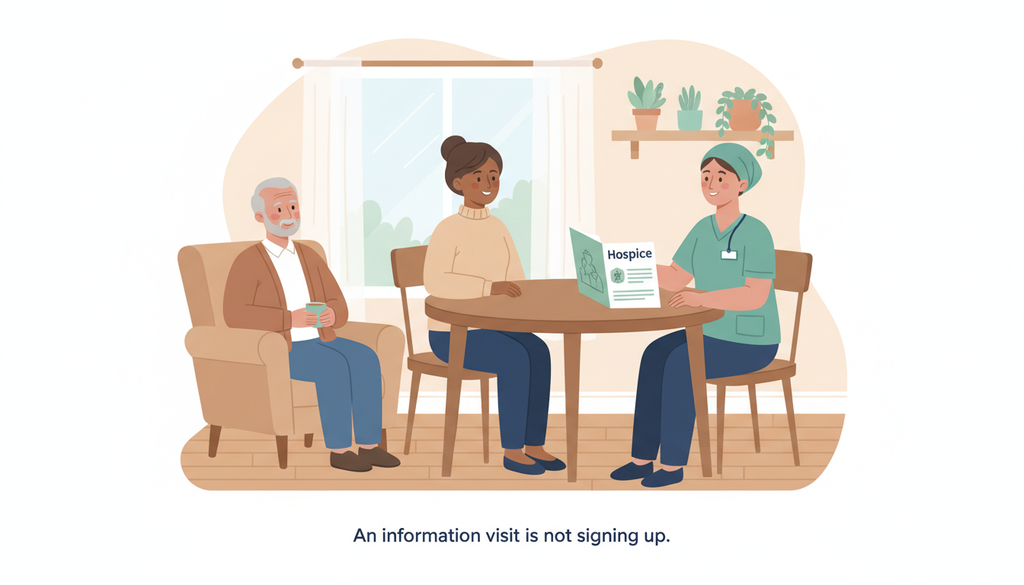
The Hospice “Information Visit” (You’re Not Signing Up)
Many families worry that if hospice comes out, they’re automatically enrolling. That’s not true.
A hospice consult/evaluation visit is often a chance to:
· Review medical history and medications
· Talk about goals and expectations
· Learn what hospice can and cannot provide
· Ask questions about nights/weekends and emergencies
It’s also okay to interview more than one hospice agency to find the right fit.
Questions to Ask Your Doctor or Care Team
Bring these questions to appointments:
1. Do you have a palliative care program here?
2. How is palliative care paid for with my insurance/Medicare/Advantage plan?
3. Do palliative providers come to the home, or is it clinic-based?
4. If we start hospice, what changes about medications and appointments?
5. What support do you provide at night or on weekends?
6. What is considered an emergency, and who do we call first?
If You’re Considering Hospice: What About the ER?
If someone is on hospice and symptoms aren’t managed, the first call is usually to hospice, not 911. Hospice is a 24/7 operation, and many issues can be handled by phone coaching or a nurse visit.
If there’s a serious situation (like a fall with possible fracture), hospice may recommend going to the ER. Families can also stop hospice at any time if they decide they want aggressive treatment.

The Takeaway: You’re Not Choosing Death—You’re Choosing Support
One of the biggest messages we want families to hear is this:
You don’t have to wait until you’re in a crisis. Getting the right support earlier can reduce stress, improve comfort, and help you feel less alone.
If you’re caring for someone with dementia and you’re wondering what’s next, start with a conversation and build a simple plan—then adjust as things change.
Want a Simple Guide You Can Print?
We’ve included a free PDF guide and checklist in the show notes: “Palliative Care vs Hospice”. It breaks down the differences in plain language and includes a simple guideline for hospice acceptance for a loved one with dementia.
If this post helped you, please share it with a friend who’s carrying a lot right now. You’re not alone.
Thank you for spending time with us this week. We’re so glad to be part of your journey in caring for your aging loved ones. It’s an honor to share resources, insights, and a little encouragement to support you along the way. We look forward to bringing you more helpful tools and compassionate guidance in the weeks ahead. See you back here soon!
With care,
Pam and Linda
Your Nurse Advocates
“Compassionate Care for Aging Adults Along With Peace of Mind for the Family”
Resources:
Podcast Episode #212 Hospice vs. Palliative Care
Podcast Episode 105-Cracking the Hospice Code
National Institute on Aging: What is Palliative Care and Hospice Care
About the Authors
At Your Nurse Advocate Consulting, Pam and Linda’s mission is to empower aging adults and their families to take control of their health, prepare for life’s uncertainties, and secure their peace of mind. We are dedicated to providing compassionate guidance, personalized support, and expert resources to help our clients navigate complex medical needs and organize their personal affairs.
As independent patient advocates we have a steadfast commitment to clarity, family well-being, and empowerment, we strive to make a meaningful impact by ensuring our clients feel confident, prepared, and cared for every step of the way on their healthcare journey.
Expert Guidance You Can Trust
With over 80 combined years of R.N. experience navigating the complex healthcare system, we stand as trusted guides for seniors and their families. Our expertise ensures they can access the care and resources they need without feeling overwhelmed by red tape or confusion.
Medical Disclaimer
The information provided in our emails and all forms of content including but not limited to podcasts, blog posts, videos, or social media posts are for informational purposes only and is not intended to substitute professional medical advice, diagnosis, or treatment. Always seek the advice of your physician or other qualified healthcare provider with any questions you may have regarding a medical condition or care plan. Never disregard professional medical advice or delay seeking medical care because of something you have read here. Your health and well-being are our top priority.